
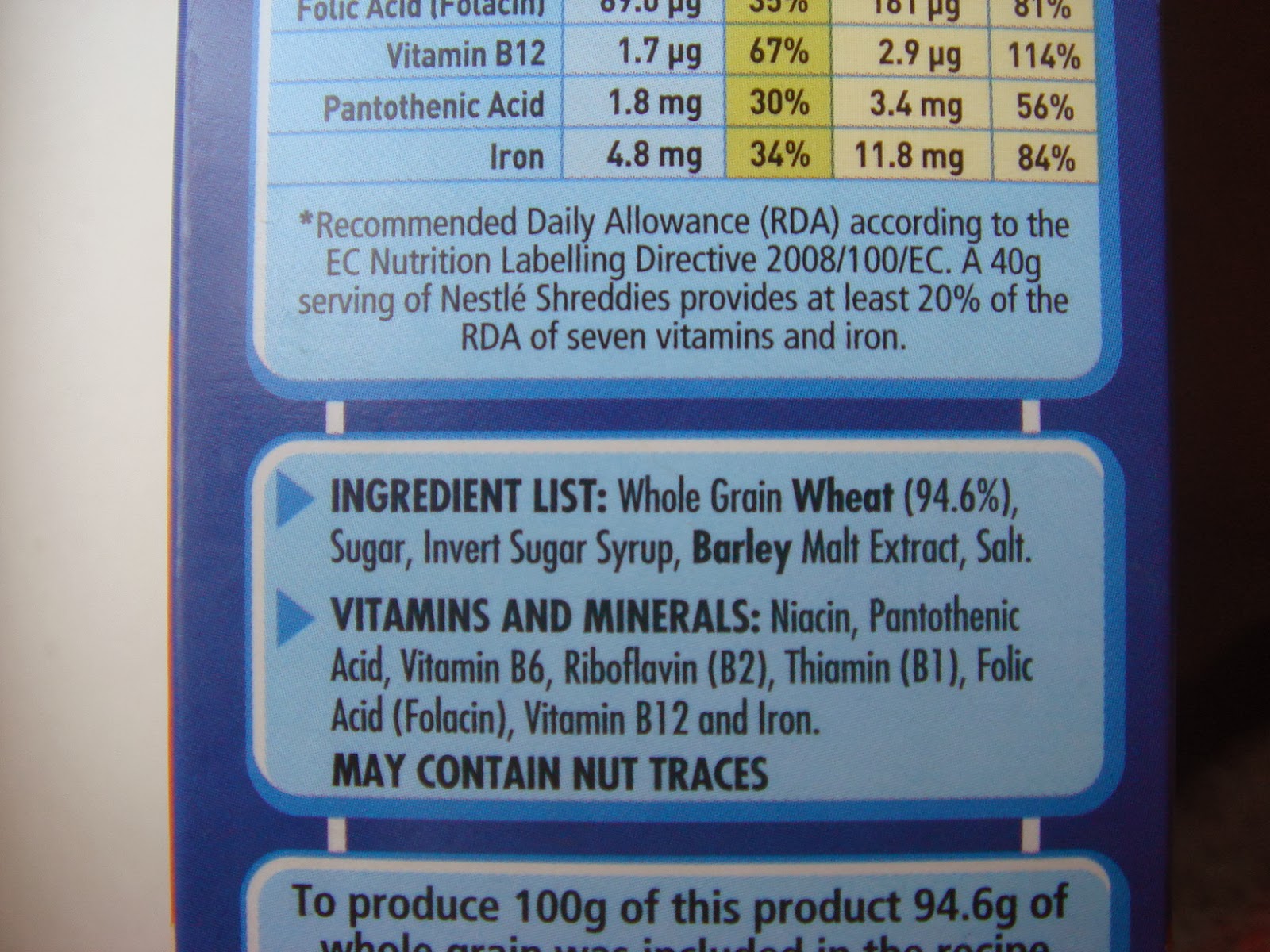
An example of allergy labelling in bold
If you’re an avid food label reader (and I’m assuming you
are) you will have noticed that certain ingredients are now being highlighted in
bold. This is all down to new food labelling legislation, which becomes
compulsory on December 13, 2014. It includes a new requirement for allergen
information to be provided upon request for ‘loose’ foods as well, such as you
would buy in a café, bakery, deli counter or market (or indeed in a hospital, school etc).
The EU has identified 14 food allergens that are
particularly serious. These are presumably also particularly tricky to avoid – quite
a few people are allergic to strawberries, for instance, but not eating food
containing strawberries would be a lot simpler. These EU chosen few are*:
·
cereals contain gluten (ie. wheat, barley,
spelt, rye, kamut, etc etc)
·
eggs
·
milk
·
peanuts
·
nuts
·
fish
·
crustaceans (that’s lobsters and crabs)
·
molluscs
·
soybeans
·
celery
·
mustard
·
sesame
·
lupin (found as a flour in some baked products)
·
sulphur dioxide (at levels about 10mg/kg or
litre)
Unfortunately, it is sometimes not that easy to know which
ingredient may be egg-derived, or contain gluten, or whatever. Whey? Contains
milk. Bulgar wheat? Contains gluten. Buckwheat? Doesn’t contain gluten and not
even related to wheat. And so on.
For some time there has been a little allergen list at the
bottom of the ingredients. The idea behind highlighting problematic ingredients is to make it easier for people with food
allergies to identify ingredients they need to avoid. There may still be
a ‘may contain’ box as well, however, for those pesky trace allergens.
Do take a look at Sainsbury’s if you need to exclude certain
allergens – they update their product guidance lists every month (or you can ask
instore). They have identified thousands of products that do not contain
certain allergens in the recipe and for which they have effectively controlled
cross-contamination. You can ask for a tailor-made list if you need to avoid
more than one allergen too.
* There are a few ingredients that are derived from foods on
the list but are considered so highly processed that they are no longer capable
of triggering an allergic reaction. You may still want to avoid them. Click here for the list as laid down by the
EU.
A summation is as follows:
1. Sweeteners: wheat-based glucose syrups and
dextrose; wheat-based maltodextrins; barley-based glucose syrups
2. Fish gelatine
used for vitamins or to clarify beer or wine, also isinglass from fish for this purpose
3. Fat/oil: fully refined soybean oil or fat
4. Antioxidant: tocopherols (E306 - Vitamin E)
5. Cholesterol-reducing agents: phytosterols, phytosterol esters and plant stanol esters
from soybean sources
6. Spirits made from gluten-containing cereals, nuts or
milk (whisky would fall into this category, for instance)

